
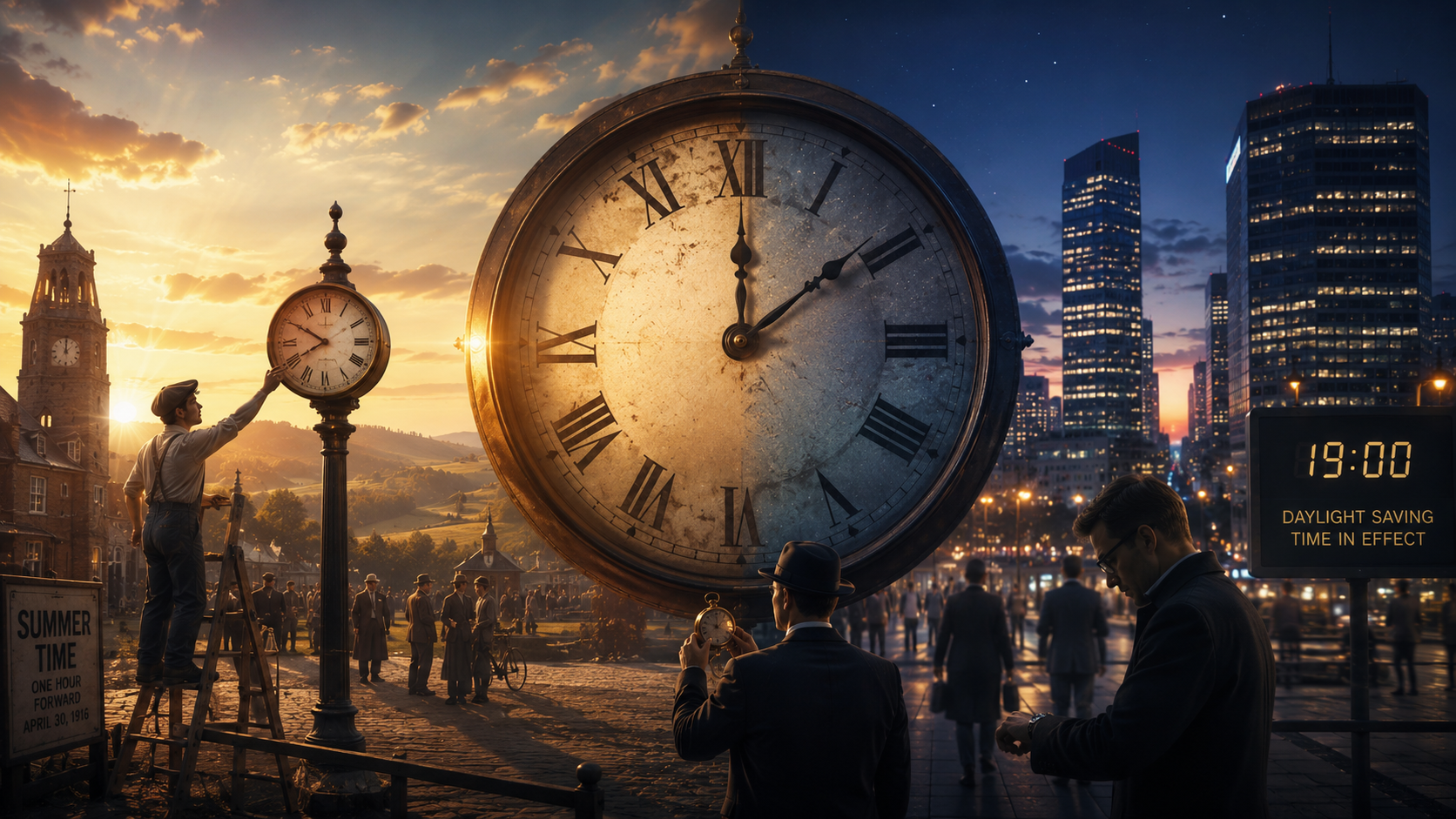
The Strange History of Daylight Saving Time
Why do we change our clocks twice a year? The history of Daylight Saving Time (DST) is a fascinating, frustrating journey from golf courses to wartime coal conservation.
An Idea Ahead of Its Time
The concept of Daylight Saving Time (DST) is often mistakenly attributed to Benjamin Franklin, but it was actually proposed by a British builder named William Willett in 1907. He wanted more daylight in the evenings for playing golf.
Wartime Necessity
DST wasn't widely adopted until World War I, when Germany implemented it to conserve coal. Other nations quickly followed suit. After the war, many countries abandoned it, only to bring it back during World War II.
The Modern Debate
The energy savings of DST are now highly debated, and studies suggest the biannual clock changes cause spikes in heart attacks and traffic accidents. Many regions are currently considering abolishing the practice and staying on a single permanent time.
Ready to manage time zones better?
Check the World ClockRelated Articles
The Ultimate Guide to Managing Time Zones for Remote Teams
Discover practical strategies and tools to keep your globally distributed team in sync without the scheduling headaches.
GMT vs UTC: What's the Difference and Why Does It Matter?
GMT and UTC aren't the same thing — and in aviation, finance, and computing, the difference matters. Learn the history, the technical distinctions, and when it counts.